Friday, 26 September 2025

Refuting the "Calvinist Conundrum" of Jerry Walls

In a presentation available on YouTube, the well-known and capable Arminian philosopher, Jerry Walls, presents what he calls a "Calvinist Conundrum".

His whole presentation is available here and the relevant section for our purposes starts at 19:55 and runs through to 23:29.

Walls presents the conundrum with the following premises and conclusion:

1. God truly loves all persons

2. Truly to love someone is to desire their well being and to promote their true flourishing as much as you can.

3. The well being and true flourishing of all persons is to be found in a right relationship with God, a saving relationship in which we love and obey him.

4. God could determine all persons freely to accept a right relationship with himself and be saved.

Therefore, 5. All persons will be saved.

As Walls points out, few evangelicals will accept the fifth premise, as not all persons will be saved. Therefore, he says, one of the four premises must be wrong.

As an Arminian, his choice is simple. He rejects premise 4. For the Arminian, God cannot determine someone to freely accept a relationship with himself. 

Yet premise 4, is a key Calvinist belief (known as irresistible grace in a world where divine determinism is compatible with human free will).

So, says Walls, the Calvinist must reject one of premises 1-3.

In my view, Jerry Walls's conundrum fails because his conclusion 5 does not logically follow from the first four premises.

There is logical leap that he makes here, which is unwarranted. 

Let's look at the first three premises again and then suggest a logical conclusion based on those premises first, before we come to Walls's fourth premise.

1. God truly loves all persons

2. Truly to love someone is to desire their well being and to promote their true flourishing as much as you can.

3. The well being and true flourishing of all persons is to be found in a right relationship with God, a saving relationship in which we love and obey him.

Therefore, 4A. God truly has a desire to save everyone.

Many Calvinists would agree with 4A. Those who don't would likely question either 1 or 2 (i.e. either God does not love everyone or that God can truly love someone but not desire their wellbeing in a saving sense).

Now, if we take our new first conclusion along with Wall's fourth premise (we will call this 4B) we have this:

4A. God truly has a desire to save everyone. 

4B. God could determine all persons freely to accept a right relationship with himself and be saved.

I believe it is clear that Walls's conclusion does not follow logically from 4A and 4B:

Therefore, 5. All persons will be saved. 

For Wall's conclusion to be valid, it rests on a hidden premise. The necessary hidden premise would be this:

4C. God must fulfil any desire he has if he is capable of doing so.

Only if 4C is true would Walls's conclusion 5 be valid. However, it is precisely this hidden assumption that Calvinists reject. For it is that this point precisely that God's sovereignty comes into the equation. God has the right to choose which of his desires he acts on, or rather decides to to act on in his decree, and which he determines will remain mere velleities (wishes or inclinations not acted upon).

Most Calvinists accept that God has desires for some things, considered in themselves, that he nevertheless chooses not to fulfil in his decree because of other conflicting desires or when considering something in light of everything else or in a connected way with everything else. In this context, God can desire the salvation of all when considered simpliciter yet desire the salvation of some and the condemnation of some when considered complexiter and in the light of God's desire to display his own glory and attributes above all else.

For these reasons, the existence of premises 4A and the hidden assumption in 4C, Walls's conundrum fails to present any significant problem for the Calvinist theologian. Rather than being a concundrum, it is a Calvinist explanation of the wisdom, knowledge and sovereignty of God.



Sunday, 14 September 2025

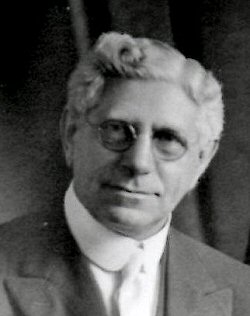
Great Theologians 1: Louis Berkhof

Louis Berkhof (1873-1957)

Louis Berkhof was a Dutch American Reformed theologian. His Systematic Theology (1941) is still one of the finest one-volume summaries of the Reformed faith. The book is particularly dear to me because it was one of the first "serious" theological book I bought not long after I became a Christian in 1987.

I remember being amazed that a single book could seek to cover the whole range of Christian doctrine. I have loved systematic theology ever since.

One of the things I still love about Berkhof's work is that he represents a kind of mainstream, centre-cut Reformed theology, which rightly or wrongly I have always thought of as the standard by which to judge other Reformed theologians idiosyncrasies. Berkhof never seemed to have any. He was fully in line with the Reformed confessions and a standard Reformed understanding of the Scriptures. 

Obviously, he writes from the Dutch Reformed tradition, which I hold in the highest esteem, second only to the Scottish Presbyterian tradition, which it closely resembles, of course.

Like many Dutch-American Reformed theologians of the late 19th and the first half of the 20th century, Berkhof was born in the Netherlands and moved to the United States with his family in childhood. In Berkhof's case, he moved to American as a boy in 1882. The family settled in Grand Rapids, Michigan, which has remained an important centre for Dutch Reformed people in the USA.

He studied at college in Grand Rapids and then Calvin Theological Seminary in that same city. He became pastor of a Christian Reformed Church in Allendale, MI in 1900. He pursued further theological studies at Princeton Theological Seminary, gaining a BD in 1902. He studied under the likes of B. B. Warfield and Geerhardus Vos at Princeton.

After another pastorage in Grand Rapids, he joined the faculty of Calvin Theological Seminary and 1906 and worked there for the next four decades, retiring in 1944. Among his many students, the most famous is probably Cornelius Van Til (1895-1987), the great presuppositionalist apologist and theologian.

As well as his famous Systematic Theology Berkhof wrote many other important theological works, including The History of Christian Doctrines and Principles of Biblical Interpretation. He also produced two simplified versions of his magnum opus suitable for younger readers or new Christians, which he named Summary of Christian Doctrine and Manual of Christian Doctrine.

Clearly, a book written in 1941 is of its time. It engages with theology as the discipline stood at that time, though Berkhof's main focus is on the Scriptures and the Reformed creeds, rather than say liberal or neo-orthodox theologians. However, given that Berkhof's treatment is thoroughly Bible-based, the book's value cannot diminish or date very much and certainly remains one of the most useful explanations of classic Reformed theology.

Thursday, 14 August 2025

Should City Churches Celebrate the Harvest Festival?

Christ Church Lanark 

This may seem a strange question perhaps, especially as we still bask in the heat of summer here in the UK. The question is straightforward. Should an urban church celebrate the harvest festival or is this something only relevant for rural parishes surrounded by the farms?

Growing up in church, the Harvest Thanksgiving Service as a fixed point in the church calendar, though I grew up in the inner city. Each October we had a Harvest Weekend, which consisted of a Harvest Supper—a church meal held on the Saturday evening—and a Harvest Thanksgiving Service held on the Sunday. Produce that had been donated for the harvest service was then distributed to elderly and needy people in the parish as well as to local charities working with the homeless and foodbanks.

In the church I now attend, we do not mark harvest in any way and I have always thought that was strange. The answer I once received was that as we are a city parish, harvest is something for rural parishes and so it is not relevant to us.

I didn't agree with that thinking then and I don't agree with it now.

So here are my reasons why I think celebrating harvest should be a part of urban church life as well as in rural churches.

1. Harvest Thanksgiving is about giving thanks to God for his provision for us. Christians in city parishes have no less reason to thank God for the production and supply of crops, fruit, vegetables, meat, fish and dairy produce than anyone directly involved in the production of these foods. Likewise, we can thank God for fresh and clean water, essential to life.

2. A Harvest Thanksgiving service gives us an opportunity to speak about God's creation and creation care more widely, which is obviously of relevant to all Christians wherever they live.

3. Harvest Thanksgiving can also provide an opportunity to reflect on those parts of the world that do not have enough food or clean water and encourage Christians to support charities working in these areas.

4. In urban areas, the concept of thanksgiving for the Harvest, can be broadened to include the "Harvest" of all the talents and work done by others that are good gifts from God—teachers, doctors, nurses, manufacturers, tradespeople, etc.

5. Harvest Thanksgiving in urban areas gives an opportunity to remind children (and indeed all city dwellers) that food does not ultimately come from supermarkets, but from farms and fisheries, and ultimately from God's providing hand.

These are practical reasons and possibilities to make an urban harvest relevant. There is no particular need to gather food in church for the service, though there may be benefit in doing so to support local foodbanks and charities.

It just seems really restrictive to me to suggest that only farmers or fishermen have any reason to give thanks to God when the harvest of food comes in each year. As the harvest hymn says:

All good gifts around us are sent from heaven above;
Then thank the Lord, O thank the Lord for all His love. 

Friday, 1 August 2025

Theocast Podcast

I've recently come across the Theocast Podcast on YouTube. So far I thoroughly recommend the approach towards justification and sanctification in these videos, as well as the way they use the law and gospel distinction.

Seems to be to be very helpful for the Christian life and much better than those approaches that give freedom in Christ with the one hand in justification and then take it away again immediately afterwards in sanctification.

https://www.youtube.com/@THEOCAST 

Tuesday, 29 July 2025

The Problem with the Arminian View of Foreknowledge

It occurs to me that there is a problem with the Arminian view of God's foreknowledge.

Typically, Arminians believe that God only has simple foreknowledge of what will occur in time. He foresees what will happen and that is all. He then lets it all "play out" so to speak in time. If this is so, then God's foreknowledge is more-or-less useless to him; he knows what will occur, but he is unable to change what will occur. If God has simple foreknowledge of all that will happen in time, then God is unable to change what will occur, for his own actions must also form part of his foreknowledge. Nothing can be different from it is in this world, because God has foreseen and foreknown what will happen.

As I understand it, this does not even leave God with the option of not creating a particular person or allowing a particular course of events to take place, so that the future can be changed, for if God foreknows something, and God cannot change, then what God foreknows cannot be changed either, not even by him.

The God of Arminianism therefore appears to be trapped by his own foreknowledge. This does not seem to me to be in accord with the Scriptures regarding God's sovereignty and ability to bring all his purposes to fulfillment.

This is in sharp contrast with Calvinism where God ordains the future and so could have ordained anything he wanted, and it is also in contrast with Molinism where God foreknows a range of possible worlds and chooses to actualise one of them. It is also in contrast even with Open Theism where God knows possible worlds, but not which one will be realised until free choices are made. Instead, in the simple foreknowledge view, God simply knows what will occur and there appears to be no way for this to be changed, even though God may hate what is going to occur.

In any event, Arminians must face exactly the same criticisms they level at Calvinists. It is common for Arminians to say to Calvinists things like: if your God chooses to allow sin to occur, he is the author of sin. But if God foreknows that sin will occur and does not stop it, he is also morally culpable by any normal reckoning. And if God cannot stop it, then he is not sovereign at all. But according to simple foreknowledge God logically cannot stop evil from occurring or his foreknowledge would be different, which is impossible given the classical view that God's omniscience is immutable.

Christian Standard Bible Anglicised Edition

When the Christian Standard Bible came out in 2017 I thought it was one of the best English translations to come out in a while. It ticked pretty much every box for me in what I look for in an English translation, except that back then in was not available in a British English or anglicised edition. This is important to me as a reader as the American spelling of many important biblical words are jarring, especially Saviour and other "our" words.

 I actually wrote to Holman (the publisher) to ask if there were any plans to bring out a British English edition. Initially, there were no plans, but I was delighted when the CSB Anglicised edition came out about a year ago in summer 2024.

I really do think the CSB is an exceptionally readable and accurate translation that does not consider itself bound by Bible translation tradition. A good example would be John 3:16, which is traditionally rendered something like: "For God so loved the world that he have his only begotten Son, that whoever believes in him would not perish but have eternal life.

 The CSB reads: " For God loved the world in this way: He gave his one and only Son, so that everyone who believes in him will not perish but have eternal life."

I would highlight three improvements in translation in this rendering.

1.  The Greek word Houtos normally refers to the manner in which something is done, not the degree to which something is done. Although "so" can used in either sense, the natural understanding in English of "For God so loved the world" would be that John was referring to the degree of God's love rather than the manner of God's love (which is what the Greek word means). Therefore the CSB's "For God loved the world in this way" is more accurate to the Greek.

 2.  Most scholars now recognise that monogenes does not refer to someone being only begotten, but to them being unique (literally one-of-a-kind). The CSB's "one and only" is therefore preferable to the traditional "only begotten".

3. The Greek literally refers to "every believing one" in the second half of the verse. There is no generic "whoever" in the Greek. The CSB's "everyone who believes" is much more accurate than "whoever believes".

This is just one verse, though a very famous verse. I'm sure similar points could be made throughout the CSB.

 I use the Bible Gateway website for much of my Bible study and I was delighted to see that the Christian Standard Bible Anglicised edition is now an option on the site. I haven't checked the app but I'm sure it will also be on there.

Having the CSB in British English is a great move by Holman and I now plan to use the CSB as my main Bible from now on.

On the translation spectrum, the CSB is somewhat more literal than the NIV and more natural than the ESV, which I think is an ideal balance. The footnotes in the CSB with alternative, sometimes more literal translations, are also excellent in this version. 

Monday, 17 March 2025

My Mother's Death

Christina Allan Miller (née McCulloch) (1945-2025)
 
My mother died peacefully in her sleep at Glasgow Royal Infirmary after a long battle with illness just after midnight on Sunday, 16th March. She was 79 years old. My sisters and I and the rest of the family are all deeply mourning her passing.

Christina Allan McCulloch was born in Glasgow on 3rd October 1945 and was the eldest of two children of Aaron McCulloch (1917-1990) and Jessie McCulloch née Purdie (1920-2002). Coincidentally, she shared the same birthday as my father, 3rd October, though born in different years.
She was baptised on 21st November 1945 at St Thomas' Church of Scotland on Gallowgate and remained a church member her entire life.

Her father, Aaron ('Ernie') was a Battery Sergeant Major in the Royal Canadian Artillery, stationed in the UK during World War 2 where he met my grandmother. They were married in 1944. As well as my mother, they also had a second daughter, Jean ('Jeanette') born in 1947. The family moved to Canada after the war, but unfortunately, the marriage did not endure and my grandmother and mother returned to Scotland before Jean was born.

As an adult, she later met her father and her half-siblings, Ian and Susan, in Canada and continued to be in contact with them from then on.

My mum grew up in the house she had been born in at 227 Abercromby Street and she attended St James's Primary School in Calton and John Street Secondary School in Bridgeton. She left school at sixteen and worked in several office jobs, going from office junior to senior positions in the accounts and wages departments of several local firms in Bridgeton including the large Welma Bakery.

The family were always churchgoers and my mother became a member of Greenhead and Barrowfield Church in London Road when she was about 16 years old. After it was closed down, she became a member of Calton New Parish Church near the Barras (later named St Luke's).

She later joined the Orange Lodge and it was there she met my father, James Miller (1929-2011). They were married on 23rd October 1971 and the marriage lasted until his death in 2011, less than a year short of what would have been their Ruby wedding anniversary.

After she got married, my mother gave up work and became a mother when I was born in 1972. My parents then went on to have three more children, all daughters in 1974, 1977 and 1981.

My mother was always shortsighted but in 1978 she suffered a detached retina which resulted in the loss of sight in one eye. Although this must have been a lot to come to terms with for a young woman in her early 30s, she never showed it and went on to have another child in 1981 and thereafter went back to work as a Home Help from 1985 until she retired.

The family moved to a bigger house in 1978, where she lived until her death (she only lived at two addresses from birth to death) and soon after we all started going to Bridgeton St Francis-in-the-East Parish Church in Queen Mary Street. It was there she became heavily involved in the life of the congregation.

An important event for my mother was the Billy Graham rallies held in Glasgow in 1991. Although going as a member of the choir, she came to Christ personally at one of those meetings and always felt that her faith had deepened and strengthened after that.

She was ordained as an elder of the church in 1992 and served in many ways in the church, including the church singing group, session and board meetings, fundraising, social events, and a spell as the church's cleaner. She also attended the midweek prayer and Bible study meeting faithfully for many years and two services on Sundays most weeks.

Although with four kids to look after she must not have had a lot of free time when we were growing up, she had many hobbies and interests.

She loved dogs and always had a dog or two dogs as pets all her life. They became her constant companions in later life. 
 

She loved watching films, especially thrillers, westerns and war films. Before her eyesight started to fail, she loved reading books and was a big fan of the thriller writer Jeffery Deaver. Later she would listen to audiobooks with my sister.

She was a lifelong Rangers supporter and used to attend regularly at Ibrox during the 1960s before she got married. She was still listening to games right up to when she had to go into hospital for the last time. She also loved other sports including Rugby and has been to Murrayfield several times to watch Scotland. On TV and the radio, she also liked to watch or listen to boxing matches, especially heavyweight world title fights.

She also used to knit and she was good at drawing.

She was a good singer and loved listening to all kinds of music, from the Beatles to Lady Gaga. She also enjoyed listening to classical music at times. Puccini was her favourite composer.

Every week she would write letters to her sister in Canada, and later she regularly corresponded with her father and half-sister in Canada also.

She loved East Lothian and we spent many holidays through at Port Seton. She also liked the bustle of seaside holidays at Blackpool and went to Spain on holiday several times. She later enjoyed trips to Canada a few times and New York. Later she enjoyed many holidays on the Isle of Mull or up in Nethybridge or Boat of Garten, as well as the Peak District at Chatsworth. One of her last big holidays was a cruise to Norway just last year after her first stroke.

Aside from all that, she was a fantastic mum and was very proud of her children and anything we accomplished. She doted on her grandchildren.

Above all she was my friend—I could talk to her about anything and everything—and I will miss her wisdom, her wit and her love. The whole family will always miss her, though we are grateful her health struggles are over.
 
My wife once asked her what she would like to be remembered for. She said: "That I was a formidable woman."

Rest easy mammy. You were that and so much more.

Monday, 20 January 2025

The Value of Reading Books You Don't Agree With

There's only so much time for reading in any week or any year for that matter. I confess that I mainly read books in the Reformed tradition, not because it's the tradition I agree with (though I do) but because there are so many great books of Reformed theology and by Reformed theologians and so many that haven't read yet. If I aim to read 8-12 a year that is quite good going, depending on their length, in among the other things that take up my time in any normal week. It is my belief that it is best to mainly read books that teach Christian truth and I believe Reformed theology is the best expression of Christian truth we have, outside Scripture itself.

Yet I also believe there is value in reading Christian books from outside my own comfort zone. By this I would include evangelical books that are not Reformed as well as books outside the evangelical tradition.

Even though I believe such books will contain errors, sometimes more and sometime more serious errors, sometimes less, there is still value in occasionally reading books where you know in advance that you will disagree with the author. There are at least three good reasons for doing so.

1. The first reason to read books you don't or won't agree with is because they will help you define and defend what you believe better. They will force you to think through what you really believe and when you hit points in such books where you find yourself reacting against it, this will help you focus on where those points are and why you disagree.

2. Secondly, reading books from other theological positions will help you understand the teachings of those you disagree with by having those positions explained to you by their best exponents and not just by their critics. This will help you criticise positions you disagree with more fairly and in many cases more strongly when arguing against them.

3. Thirdly, reading books you don't agree with will help you to refine your own beliefs and bring them into closer conformity with the truth. Understanding other views better will often give you a better understanding of those you disagree with, without agreeing any more with them. Occasionally, you may even be more committed to your original views having seen "the best your opponents have to offer."

I would not advise new Christians to read a lot of books like this, but mature Christians could benefit in these three ways from reading maybe one or two books a year outside your own comfort zone.

Sunday, 29 December 2024

Another Christmas

I hope you had a very merry and blessed Christmas and were able to spend time with family and friends.

As I write this, Christmas Day was four days ago, and it's "all over" for another year. It is true the presents have been opened, the festive food and drink consumed, the carols sung, the Christmas servces attended. Soon our focus will move on to the New Year celebrations—always a strong tradition in my native Scotland—and the resolutions and plans for 2025.

Yet the thing is that Christmas cannot simply be "all over" or "put away" like the boxes of decorations until next December.

What we celebrate at Christmastime is that the birth of Jesus made the world different. It could never be the same again. 

If you are Christian, you understand this already. Anyone reading this who is not yet a Christian, I hope one day you will come to understand it soon.

The coming of Jesus to this world really does mean it is like Christmas every day (and not just in the words of a chessy Christmas pop song).

One of the titles given to Jesus is "Immanuel" which as Matthew 1:23 says (quoting from Isaiah 7:14), means "God with us."

His coming was not a temporary visit. He came to be with us and he is still with us now, in our hearts and by the Holy Spirit.

I pray that you will have Immanuel with you and in you, as we head into the new year in a few day's time.

Thursday, 5 December 2024

Waiting for God

The season of advent focuses the Christian church on the need to wait for God. Waiting should be seen as a spiritual discipline. In our modern world, to deliberately stop and wait for something is a very countercultural act. As a culture we prioritise, maybe even idolise, speed and limitation, if not the elimination, of waiting.

During advent, we spend four weeks focusing on the wait. The wait of God's people for centuries for the Messiah to come in his birth at Christmas. We focus too on the wait of God's people for centuries for the Messiah to come again to judge the world and reign over a new heavens and new earth in the eternal Kingdom.

The Bible values waiting. Isaiah 40:31 reads: "They who wait for the Lord shall renew their strength; they shall mount up with wings like eagles; they shall run and not be weary; they shall walk and not faint."

In Psalm 130:5-6, we read: "I wait for the Lord, my soul waits, and in his word I hope; my soul waits for the Lord more than watchmen for the morning, more than watchmen for the morning."

I always find these verses among the most emotional in the Psalms, especially that use of repetition in verse 6. 

Are we waiting for the Lord this advent? Waiting not only for Christmas, which Lord willing, will surely come around again later this month. Waiting not only for the return of Jesus, which will surely come at the appointed time. But are we waiting on the Lord as the Psalmist waited, with hope in his word, and with a longing to be redeemed and see all our nation redeemed, set free to love and serve the living God.

I pray we are waiting with expectation and readiness, and more than watchmen waiting for the morning, more than watchmen waiting for the morning.