This is an excellent resource that in short, sharp focus manages to destroy 21 common misunderstandings regarding Reformed theology.
21 Misunderstandings of Calvinism | Sam Waldron
Warmly recommended.

This is an excellent resource that in short, sharp focus manages to destroy 21 common misunderstandings regarding Reformed theology.
21 Misunderstandings of Calvinism | Sam Waldron
Warmly recommended.

John Owen (1616-1683)
John Owen is one of the most important theologians in the Reformed tradition of all time, and may justly be considered the leading theologian of the Puritan period in England. For good reason, he is often referred to as the Prince of the Puritans.
His life encompasses a huge range of achievements as a nonconformist church leader, theologian, academic, chaplain and even, briefly, a Member of Parliament.
He was of Welsh ancestry but born in Stadhampton, Oxfordshire in 1616 (his actual birth date is unknown). He graduated from Oxford University with a BA in 1632 (aged 15 or 16!) and an MA in 1635.
He was brought up and followed the Puritan tradition and upon the outbreak of the English Civil War, he sided with the Parliamentary forces against King Charles I. This decision would cost him as he was cut off from inheriting his Welsh uncle's fortune, who was an ardent royalist.
He eventually became a chaplain to Oliver Cromwell and preached a sermon before Parliament the day after King Charles was executed in 1649. He was later appointed as Vice-Chancellor of Oxford University by Cromwell in 1652.
A congregationalist in church polity, Owen took a leading part in the Savoy Declaration of 1658, which was a revision of the Westminster Confession of Faith, the main revisions being the sections on the Church and Church governance.
Owen married his wife in 1644 (Mary Rooke) and the couple had 11 children, but 10 of them died in infancy, as was not uncommon in those times.
Owen's legacy to the church is an enormous body of writings. He was, by any standard, a prolific writer. However, unlike other Puritan writers like Thomas Watson, Owen was not blessed with an easy or attractive prose style and many of his works are a challenging read for the modern Christian. That said, his volumous output contains many classic works of the Reformed and Puritan tradition. His collected works run to 16 volumes. He also penned a monumental commentary on the Letter to the Hebrews, which runs to a further seven thick volumes.
Of the individual works which comprise his collected output, many are worthy of careful and repeated reading. His early work, A Display of Arminianism, written when Owen was 26, is a defence of Calvinist monergism and a refutation of Arminian synergism. One of his greatest and most enduring works is The Death of Death in the Death of Christ (1648) which is a full and polemical defence of limited atonement. In the words of J. I. Packer in his introduction to tbe Banner of Truth edition, Owen's work has never been refuted. Other works in Owen's output include an excellent treatises on the doctrine of justification and the work of the Holy Spirit.
Far from being a cold academic theologian, many of Owen's better known works are known for their practical application and warmth. These include Communion with God, The Glory of Christ, and perhaps Owen's most practical book of all, The Mortification of Sin.
Owen continued writing in his later life. He died in 1683 aged 66 or 67 and is buried in Bunhill Fields cemetery in London.
It's important to recognise that there is not only one way to interpret many texts in Reformed theology. There is a breadth within Reformed theology that leaves enough room for each person to have room to explore their own views while being on the inside of the circle of Reformed theology.
One important example of this that I've had in mind for some time are the Reformed approaches (plural) to the interpretation of a well-known verse such as John 3:16.
We need hardly quote what is surely the most famous verse in the whole Bible, but it reads of course, something like this:
"For God so loved the world, that he gave his only Son, that whoever believes in him should not perish but have eternal life" (John 3:16, ESV).
There are broadly two main Reformed approaches to this verse. My view, explored in some length in my book, The World of John 3:16 could be considered the more restrictive Calvinist view. I interpret the word "world" to mean "sinners from all nations" (i.e. Jews and Gentiles) and that it refers by extension to God's elect from the nations. One of the reasons for taking this view is that the love of God mentioned in this verse seems to me to be the highest type of love in God, his redeeming and electing love that achieves its aim of saving "the world" (see John 3:17). This is the view of many Calvinists—many older Calvinists it is probably fair to say, such as John Owen, Francis Turretin, Samuel Rutherford, John Gill and Arthur W. Pink.
However, I recognise that my interpretation may be incorrect and that there is a second broad interpretation which is every bit as Reformed. The other view interprets "world" as meaning "the human race" or "all of humanity". This view shares with our Arminian brothers and sisters the view that the world is all-inclusive, meaning every human being without exception. However, in this view, the love of God for the world is not the highest type of electing, saving love that God has for his people, but a more general benevolence encompassing everyone, and showing them that he is a God of compassion with what D. A. Carson calls "a salvific stance" towards everyone.
This simply means that his revealed will shows that God has some kind of intent towards the salvation of everyone who hears the gospel on the condition that they would believe. This is the view of many modern Calvinists, but also people in history, arguably John Calvin himself, Thomas Boston and the Marrow Men, and contemporary Calvinists such as R. C. Sproul, John Piper, D. A. Carson, and John MacArthur as far as I can make out.
There are some good arguments for this wider view, though I am not personally convinced by them. That's not to say I deny that other parts of Scripture do indeed teach that God takes no pleasure in the death of the wicked and would have everyone who hears the gospel accept it and be saved in accordance with his revealed or preceptive will, though not in the sense of it being God's decree or we would need to be universalists. It's only that I do believe that John 3:16 is correctly viewed as a text of this type.
Similar arguments could be applied to a number of other texts about which Reformed Christians may take different views. These include what might be called the "Arminian" proof texts such as Matthew 23:37, 1 Timothy 2:4 and 4:10, 1 John 2:2, and 2 Peter 3:9. On all these some Calvinists interpret them in a more restrictive sense, others accept the wider sense, yet deny that they undermine the doctrines of grace taught in Calvinism.
The Reformed Faith is not a monolith. And I believe it is all the richer for it.

Charles Hodge (1797-1878)
Charles Hodge is one of the most significant Reformed theologians of the 19th century. From 1851-1878 he was the principal of Princeton Theological Seminary, which was in those days a bastion of Reformed orthodoxy.
Hodge was the epitome of the conservative Presbyterian. It was said that his boast about Princeton seminary during his tenure was that "nothing new is taught here".
Born in Phildadelpia in 1797, Hodge's father Hugh had been a military surgeon in the Revolutionary War. The family had originally come from Northern Ireland and Hodge's grandfather, Andrew Hodge, was a successful businessman when he emigrated to the still colonial North America.
Hodge himself graduated from the then fairly new Princeton Seminary in 1819 and spent a year or two asa kind of missionary preacher in various parts of Pennsylvania before being ordained in 1821. In the mid 1820s he toured Europe to improve his education. Unlike many who did similar European excursions, Hodge returned to the United States with his orthodox Reformed beliefs entirely intact. He then entered the main period of his career as a seminary lecturer then professor.
Hodge did not shy away from the controversial matters that affected the American church in the 19th century. Despite being a northerner, Hodge believed the Bible allowed for the institution of slavery. On the other hand, he supported the prosecution of the Civil War by the Union forces. On Darwinism and evolution, Hodge believed Darwinism was simply a form of atheism.
Hodge wrote a number of important works still in use today. His Commentary on Romans (1837) and his Commentary on Ephesians (1856) are still useful evangelical commentaries. His magnum opus is his three-volume Systematic Theology (1872-73) which covers the whole field of systematic theology in near exhaustive detail.
Although Hodge was faithful to the Westminster standards in his beliefs and in his Calvinism, he sometimes opposed traditional understandings of some doctrines where he felt the church was not following the Scriptures, but human philosophy. Two examples are Hodge's modified views of divine simplicity (in contrast with the church fathers such as Augustine, Aquinas and Scotus) and of a strict view of divine impassibility (that God does not have any emotions). Hodge, by contrast, believed that when the Scripure speaks of God's love, this is a genuine feeling in God, and not merely an anthropopathism.
At the other end of his writing spectrum, his short book The Way of Life (1841) is a guide to Christian doctrines designed for use in Sunday schools.
Herman Bavinck (1854-1921)

Herman Bavinck was perhaps the most significant Dutch Reformed theologian of the late 19th and early 20th centuries, along with Abraham Kuyper and his almost exact contemporary, the American Presbyterdian, B. B. Warfield. He was deeply influential among future generations of both Dutch Reformed and Presbyterian theologians, preachers and believers.
Bavinck was born in the small town of Hoogeveen on 13th December 1854. His father was from Germany and was a minister in the Christian Reformed Church, a conservative and separatist denomination in the Netherlands.
He studied at Kampen and Leiden and wrote his dissertation on the ethics of the Swiss Reformed, Ulrich Zwingli. He was ordained as a minister and appointed as Professor of Theology at Kampen and then later at the Free University of Amsterdam, working alongside Abraham Kuyper. Bavinck died on 29th July 1921, aged 66.
His major theological work is a massive, four-volume Reformed Dogmatics published between 1895 and 1901. Known for its thoroughness in dealing with all areas of theology and engaging with other theological positions and traditions as they existed in Bavinck's time, it remains a high point of Reformed scholarship.
Bavinck took a classic Dutch Reformed stance on many issues, but was not afraid to make his own contributions. For example, Bavinck rejected both supralapsarianism and infralapsarianism in the area of predestination, and insisted that all God's decrees are inseparable, even logically. Bavinck was also a major theologian of the doctrine of common grace, realising that any good in this world among sinful humanity can only be as a result of God's kindness and love in operation. In 1909, he also published a one-volume condensed and simplified version of his dogmatics designed to tbe read by ordinary Reformed believers. Originally entitled Our Reasonable Faith it was later published as The Wonderful Works of God.
Bavinck's work on Reformed Ethics are still being translated into English and being published in various volumnes now.
W. G. T. Shedd (1820-1894)

William Greenhough Thayer Shedd was a 19th century American Presbyterian theologian. Originally from Acton, Massachusetts, Shedd taught for most of his career at the Union Theological Seminary in New York.
His work reveals a sharp mind familiar with a wind range of academic disciplines, though his theology was staunchly Reformed and evangelical.
He was an orthodox voice who argued for the doctrine of eternal punishment in his work The Doctrine of Endless Punishment (1885) and who argued against proposed revisions to the Westminster Confession of Faith to soften its Calvinist and predestinarian teachings, in Calvinism: Pure and Mixed (1893).
Shedd's magnum opus is his brilliant work of systematic theology, Dogmatic Theology (1888), which was originally published in three volumes.
I first came across Shedd's systematic theology in the early 1990s in the University Library and found explanations of a number of doctrines both clear and convincing. I was later able to find an original set in a second hand bookshop. A modern reprinting is now available, edited by Alan Gomes and published by Prebyterian and Reformed Books, and I recommend it highly.
His work comes from a similar place on the theological spectrum from the Hodges at Princeton, but Shedd does not follow Hodge in all matters and I think is sometimes a clearer writer, though Charles Hodge often goes into a fuller range of subjects and in greater detail than Shedd. More on Hodge later in this series most probably.
Any work you find by Shedd, whether his books of sermons, his commentary on Romans, or his theological works is well worth reading if you come across it. His writings on everlasting punishment in hell remain some of the key texts in the debate, whether the relevant chapter in Dogmatic Theology or his earlier work on the same subject.
Louis Berkhof (1873-1957)
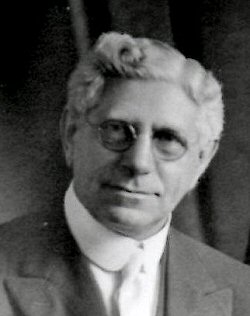
Louis Berkhof was a Dutch American Reformed theologian. His Systematic Theology (1941) is still one of the finest one-volume summaries of the Reformed faith. The book is particularly dear to me because it was one of the first "serious" theological book I bought not long after I became a Christian in 1987.
I remember being amazed that a single book could seek to cover the whole range of Christian doctrine. I have loved systematic theology ever since.
One of the things I still love about Berkhof's work is that he represents a kind of mainstream, centre-cut Reformed theology, which rightly or wrongly I have always thought of as the standard by which to judge other Reformed theologians idiosyncrasies. Berkhof never seemed to have any. He was fully in line with the Reformed confessions and a standard Reformed understanding of the Scriptures.
Obviously, he writes from the Dutch Reformed tradition, which I hold in the highest esteem, second only to the Scottish Presbyterian tradition, which it closely resembles, of course.
Like many Dutch-American Reformed theologians of the late 19th and the first half of the 20th century, Berkhof was born in the Netherlands and moved to the United States with his family in childhood. In Berkhof's case, he moved to American as a boy in 1882. The family settled in Grand Rapids, Michigan, which has remained an important centre for Dutch Reformed people in the USA.
He studied at college in Grand Rapids and then Calvin Theological Seminary in that same city. He became pastor of a Christian Reformed Church in Allendale, MI in 1900. He pursued further theological studies at Princeton Theological Seminary, gaining a BD in 1902. He studied under the likes of B. B. Warfield and Geerhardus Vos at Princeton.
After another pastorage in Grand Rapids, he joined the faculty of Calvin Theological Seminary and 1906 and worked there for the next four decades, retiring in 1944. Among his many students, the most famous is probably Cornelius Van Til (1895-1987), the great presuppositionalist apologist and theologian.
As well as his famous Systematic Theology Berkhof wrote many other important theological works, including The History of Christian Doctrines and Principles of Biblical Interpretation. He also produced two simplified versions of his magnum opus suitable for younger readers or new Christians, which he named Summary of Christian Doctrine and Manual of Christian Doctrine.
Clearly, a book written in 1941 is of its time. It engages with theology as the discipline stood at that time, though Berkhof's main focus is on the Scriptures and the Reformed creeds, rather than say liberal or neo-orthodox theologians. However, given that Berkhof's treatment is thoroughly Bible-based, the book's value cannot diminish or date very much and certainly remains one of the most useful explanations of classic Reformed theology.
